
Published: 03/27/2026
Lead-Free Solder in Heat Exchanger Cores
By: Aaron Morrow, Johnson Manufacturing
During the NARSA Heavy Duty Conference in Davenport, Iowa, in May 2025, a panel discussion addressed the growing use of lead-free solders in heat exchangers. Several original equipment manufacturers (OEMs) have already transitioned to lead-free solder in their copper-brass cores, signaling a broader industry trend toward wider adoption.
The standard lead-free solder is a 97% tin and 3% copper alloy (97/3). Traditionally, heat exchangers have used a 30% tin and 70% lead solder (30/70), with some applications increasing the tin content up to 40% (40/60).
Transitioning to lead-free solder brings higher material costs. Currently, tin is approximately ten times more expensive than lead per pound. Replacing lead with tin nearly doubles the solder's metal cost.
However, several factors can help offset this increase:
- Material Efficiency and Weight Savings: Lead-free solders are less dense than their leaded counterparts. A pound of 30/70 solder contains roughly 19 feet of wire, while 97/3 solder yields about 26 feet-- a 37% increase. This means less solder is needed to fill the same joint space, potentially reducing the overall weight of the core-- an advantage in certain applications.
- Increased Strength: Lead-free solders offer greater strength. Shear strength testing conducted by Ames Laboratories showed that 30/70 solder achieved 3,902 PSI, while 97/3 solder reached 4,192 PSI--- a 7.4% improvement. This increased strength can enhance joining durability under vibration and thermal cycling, contributing to longer-lasting products and fewer warranty returns.
- Improved Health and Safety: Managing health and safety is easier with lead-free solder. While hygiene remains essential—such as providing uniforms and work boots to prevent lead contamination, ensuring proper ventilation, and requiring thorough cleanup before eating, drinking, or smoking—using lead-free solder reduces overall risk. This can minimize the need for blood lead testing and regulatory oversight from city, county, or state agencies.
Many operators find the transition to lead-free solder challenging. Clear communication about why the change is being made and what to expect helps secure buy-in. One key difference is the temperature required to achieve proper solder flow.
A 40/60 solder starts melting at 361ºF and is fully molten at 460ºF. For a good metallurgical bond, solder melts at 446ºF and is fully molten at 619ºF, requiring a bonding temperature of 670-720ºF. This wider melting range demands an adjustment in technique. Using the same torch and gas, lead-free solder will take longer to reach flow temperature. Switching to a larger flame torch may help operators achieve better results.
Bobby Duran, the panel moderator, shared that his facility initially used tin-lead solder in large amounts to ensure strong joints. After switching to lead-free solder, they discovered they could use significantly less per core—ultimately saving money despite the higher material cost.
Lead-free coating is also available for solder tubes, enabling fully lead-free cores—a feature that may appeal to OEMs and end-users from a marketing standpoint.
Repair Considerations
A common question is how to identify whether a core coming in for repair was manufactured with lead-free or tin-lead solder. One visual cue is the behavior of the existing solder: if it remains solid while your wire flows, the core likely used lead-free solder—and vice versa.
Can tin-lead and lead-free solders be mixed? The answer is: "It depends." In most cases, if the majority of the original solder is removed, contamination is minimal. It's worth noting that tin-lead repairs have long been the industry standard, even as OEMs moved toward lead-free. Anecdotally, mixed repairs have occurred for decades without negative effects.
Conclusion
For both manufacturers and repair shops, switching to lead-free solder is a worthwhile consideration. Carefully weigh the costs and benefits to determine if the transition aligns with your business goals. Take advantage of your NARSA membership—reach out to peers who have already made the switch or are considering it. Collaborate, share ideas, and leverage your network to improve safety, profitability, and marketability.
The true value of NARSA lies in the One Idea, One Opportunity, or One Connection you gain through our meetings, forums, podcasts, and publications. Like a gym membership, the benefits depend on your level of engagement. Make plans to attend the next NARSA event, listen to the podcast, visit the website to watch past presentations, or browse old editions of The Cooling Journal. Use what you learn to make your business better.
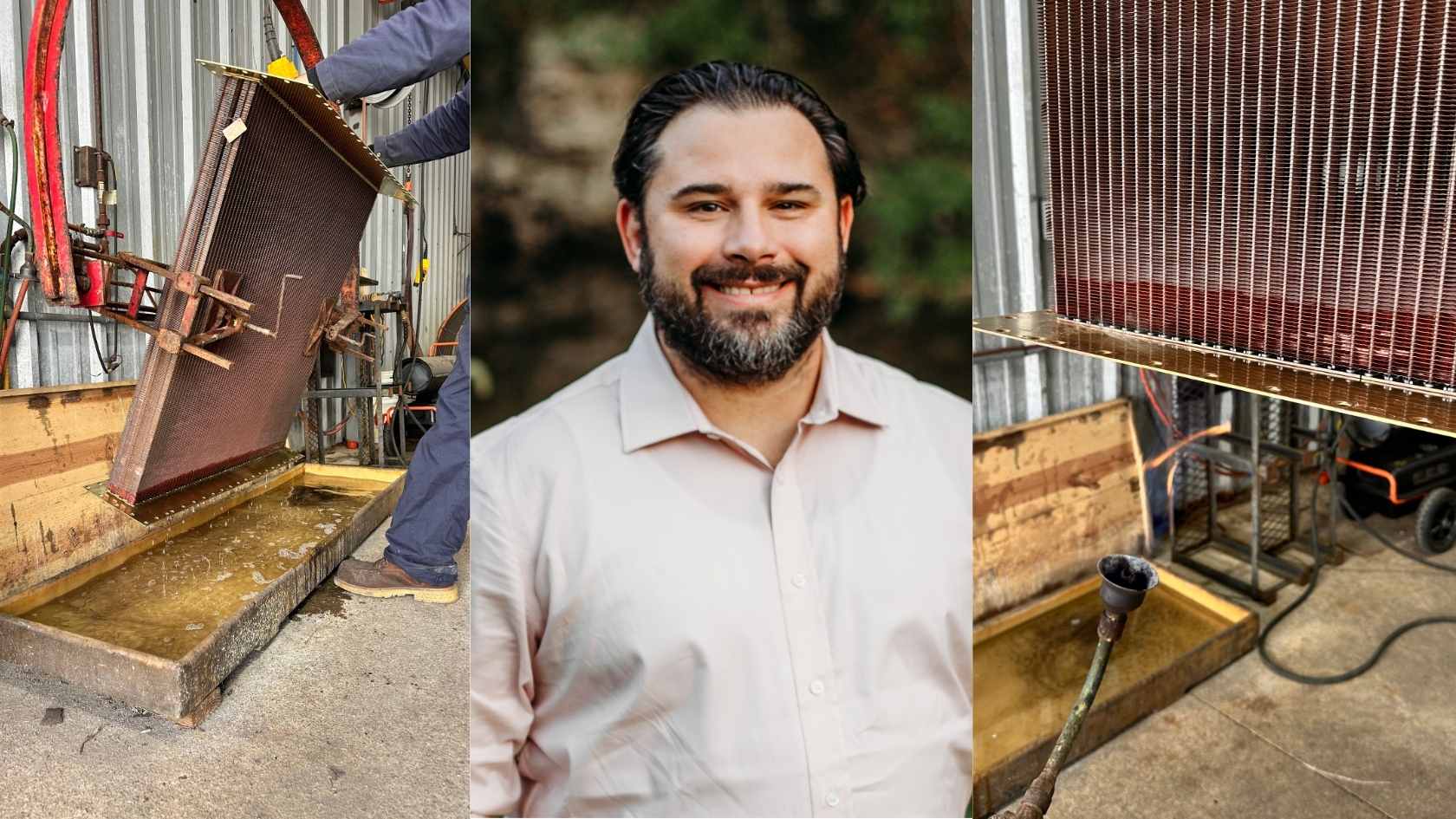
*Photos courtesy of Don Hart’s Radiator and Rocky Mount Radiator.
Want to read the full magazine?
Join NARSA today to access The Cooling Journal, the industry’s leading publication for cooling systems and diesel emissions. Members receive exclusive access to full digital issues, archived editions, and, starting May 2025, print copies delivered by mail.
Not a member yet? Sign up for a free digital subscription or contact linda@narsa.org to learn more about subscription and advertising opportunities.